
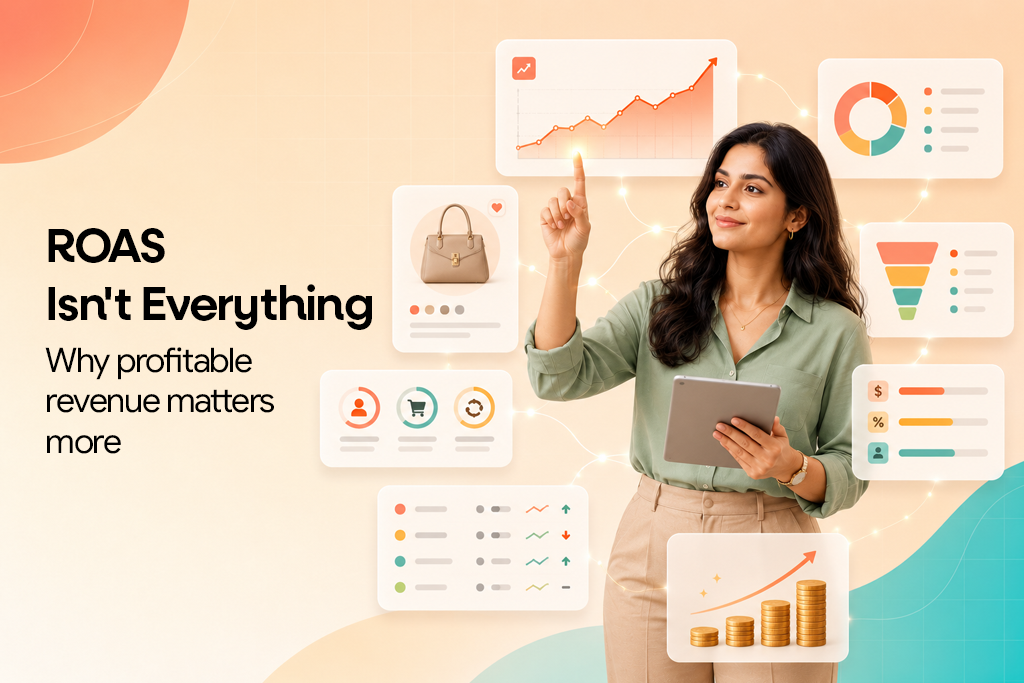
Every ecommerce brand eventually runs into the same uncomfortable reality: profitable revenue and ROAS don’t always tell the same story.
The ad account looks healthy. Meta Ads show strong ROAS. Google Ads reports rising conversion value. Revenue is moving. Campaigns look active, and the dashboard seems positive.
But when the founder checks profit, the story changes.
Margins are thinner than expected. Discounts are eating into revenue. Shipping costs are higher. Returns are reducing net sales. In many ecommerce accounts, a campaign can show 5x ROAS while the contribution margin is quietly falling.
That is where ROAS becomes dangerous.
Not because ROAS is useless, but because it is incomplete.
ROAS tells you how much revenue your ads generated compared to ad spend. It does not tell you whether that revenue was profitable, incremental, high-quality, or worth scaling.
This is why ecommerce brands need to move from ROAS-first marketing to profit-first marketing.
The real question is not only:
“What is our ROAS?”
The better question is:
“Are we generating profitable revenue?”
That shift changes how founders, marketers, and growth teams make decisions.
ROAS measures revenue generated from ad spend. Profitable revenue measures how much money remains after ad spend and major business costs are considered.
ROAS helps you understand advertising efficiency. Profitable revenue helps you understand business health.
A campaign can show high ROAS and still create weak profit if margins are low, discounts are high, returns are heavy, or the ads are mostly reaching customers who would have purchased anyway.
ROAS-first marketing creates a simple but risky habit.
If ROAS goes up, the campaign feels good. If ROAS goes down, the campaign feels bad.
That sounds logical, but ecommerce growth is rarely that simple.
A campaign with high ROAS may be selling low-margin products. Another campaign with lower ROAS may be bringing new customers who return again and again. A retargeting campaign may look highly profitable because it is reaching people already close to buying. A prospecting campaign may look weaker because it is doing the harder job of creating new demand.
When teams use ROAS as the main decision metric, they can easily scale the wrong revenue and cut the right growth opportunities.
This is similar to the decision problem discussed in the Netsights blog on decision fatigue. Ecommerce teams often track performance across Shopify, Meta, Google, GA4, retention tools, finance sheets, and custom reports, but more data does not always create more clarity. When reports are disconnected, teams spend too much time interpreting numbers instead of making decisions.
Related Read: Decision Fatigue in Business: How Bad Analytics Are Costing Your Team Time, Money, and Growth
ROAS-first marketing creates the same issue.
It gives the team a number, but not always the right answer.
ROAS stands for return on ad spend.
The formula is:
ROAS = Revenue from Ads ÷ Ad Spend
If you spend ₹10,000 on ads and generate ₹50,000 in revenue, your ROAS is 5x.
This means every ₹1 spent on ads generated ₹5 in revenue.
That is useful.
ROAS helps marketers understand whether ad spend is turning into attributed revenue. Google Ads also uses Target ROAS bidding, where Google’s AI predicts conversion value and adjusts bids to help maximize return based on the advertiser’s target.
But ROAS is still only a revenue metric.
It does not show whether the sale was profitable. It does not show whether the customer was valuable. It does not show whether the ad actually created the sale or simply claimed credit for it.
That is why ROAS should be treated as one signal, not the final scoreboard.
ROAS hides many of the costs that decide whether an ecommerce business actually makes money.
A campaign may show 5x ROAS, but that number may ignore product cost, packaging, shipping, payment gateway fees, discounts, refunds, returns, fulfillment cost, and customer support.
It may also hide customer quality.
A first-time customer buying a full-price, high-margin product is very different from an existing customer buying only because of a discount. Both orders may appear as revenue. But their business value is not the same.
This is where many teams get stuck.
Marketing sees strong campaign numbers. Finance sees weaker margins. Operations see rising returns. The founder sees growth, but not enough profit.
Now the meeting shifts from decision-making to data clarification.
Is this revenue before or after discounts? Are returns included? Is this Meta-attributed revenue or Shopify revenue? Are we looking at ROAS, blended ROAS, MER, or contribution margin?
The problem is not that the team lacks data. Instead, the problem is that the data does not connect clearly to the next action.
High ROAS can be misleading because revenue and profit are not the same.
Let’s say two campaigns both spend ₹50,000 and both generate ₹2,50,000 in revenue.
Both show 5x ROAS.
At first glance, they look equal.
Metric | Campaign A | Campaign B |
Ad Spend | ₹50,000 | ₹50,000 |
Revenue | ₹2,50,000 | ₹2,50,000 |
ROAS | 5x | 5x |
Margin After Product Cost | ₹1,60,000 | ₹90,000 |
Shipping, Fees, Returns | ₹35,000 | ₹35,000 |
Profit After Ad Spend | ₹75,000 | ₹5,000 |
Campaign A creates profit.
Campaign B creates activity.
If the team only looks at ROAS, both campaigns look successful. If the team looks at profitable revenue, the difference becomes clear.
This is the real problem with ROAS vs profitability.
ROAS tells you how efficiently ads generated revenue. It does not tell you whether the revenue was healthy.
Profitable revenue is revenue that contributes positively to business growth after key costs are considered.
ROAS answers:
“How much revenue did ads generate?”
Profitable revenue answers:
“How much value did the business actually keep?”
That is a much stronger question.
A ₹5,000 order is not always equal to another ₹5,000 order. One may come from a high-margin product with no discount and low return risk. Another may come from a discounted product with expensive shipping and poor repeat purchase potential.
Both orders may look similar in revenue reporting.
They are not similar in profit.
This is why profitable revenue vs ROAS should become a boardroom-level discussion for ecommerce and D2C brands.
A business cannot scale sustainably by chasing revenue that does not improve margin, cash flow, or customer quality.
Contribution margin helps ecommerce teams understand how much money is left after variable costs.
The formula is:
Contribution Margin = Revenue – Variable Costs
Variable costs usually include product cost, packaging, shipping, discounts, returns, fulfilment, and payment fees.
This metric matters because different products have different economics.
A 4x ROAS campaign may be excellent for a high-margin product. The same 4x ROAS may be poor for a low-margin product.
That is why one ROAS target across the whole account often creates bad decisions.
Contribution margin marketing helps brands ask a better question:
“Which campaigns are creating the strongest profit contribution?”
Once this layer is added, the marketing conversation becomes more practical.
A campaign is no longer judged only by how much revenue it created. It is judged by how much useful revenue it created.
POAS means profit on ad spend.
ROAS is the ratio of revenue to ad spend.
POAS is the ratio of profit to ad spend.
ROAS = Revenue ÷ Ad Spend
POAS = Profit ÷ Ad Spend
A subtle difference makes it a more realistic assessment of performance.
For instance, suppose that the campaign spends ₹20,000 and brings ₹1,00,000 of revenue. So the ROAS is 5x.
After all costs associated with the production cost, shipping expenses, sales discount, customer refunds, and various fees, the profit can be ₹30,000.
Then the POAS will be equal to 1.5x.
The campaign brought revenue, but its profit efficiency is much worse than ROAS implies.
POAS vs ROAS is not a question of which metric to use.
It is about understanding the strength and limitations of every metric.
MER means marketing efficiency ratio.
Formula is:
MER = Total Revenue / Total Marketing Expenses
MER allows ecommerce teams to step back from the platform reporting level.
It is important because Meta Ads and Google Ads may affect the same customer flow. The customer will see an ad on Meta, click on the Google Shopping ad, land via email, type in the brand name and purchase the product.
Each platform may have its own value.
However, the company gets one purchase order.
MER and Blended ROAS will allow teams to see if the entire marketing system is efficient and not one platform.
MER is particularly helpful when the ROAS of the platform is high, but overall profit does not increase.
If the ROAS is okay, but MER decreases, the team might spend more money to get the same amount of business performance.
Incrementality asks a simple but powerful question:
Would this sale have happened without the ad?
This matters because attribution and causation are not the same.
A loyal customer may already be planning to buy. If they click a retargeting ad before purchasing, the platform may report that the ad generated the sale.
But the ad may not have created the demand.
Google explains that incremental ROAS is calculated by dividing incremental revenue by campaign media spend, and that it can help marketers allocate spend more efficiently.
Meta’s Conversion Lift methodology is also designed to measure the incremental effect of ads, helping advertisers make decisions and optimize marketing spend.
For ecommerce brands, incrementality is especially important in retargeting, branded search, and existing customer campaigns.
These campaigns often show strong ROAS.
But strong reported ROAS does not always mean strong incremental growth.
That is why incrementality should sit beside ROAS, POAS, MER, and contribution margin.
Low-quality revenue is revenue that looks good in reports but does not make the business stronger.
It often comes from heavy discounting, low-margin products, high-return products, one-time customers, or campaigns that mainly reach people who would have bought anyway.
This kind of revenue can create a dangerous illusion.
Sales increase. ROAS looks fine. The team feels momentum.
But profit does not follow.
Over time, the brand may become dependent on promotions. Customers may start waiting for offers. Full-price demand may weaken. Marketing spend may rise just to maintain the same revenue.
This is how brands can grow top-line revenue while damaging bottom-line health.
A profit-first marketing system should separate good revenue from weak revenue.
Good revenue improves margin, brings better customers, and supports future growth.
Weak revenue only makes the dashboard look busy.
ROAS becomes confusing when it does not match what the business feels.
A founder sees 5x ROAS, but profit is flat.
A marketer sees campaign performance improving, but finance sees shrinking margins.
Operations sees fulfilment pressure and returns increasing, while the ad dashboard still looks positive.
Now the team has more questions than answers.
Is the campaign actually profitable? Are we selling the right products? Are discounts reducing contribution margin? Are we acquiring new customers or only retargeting existing ones? Are Meta and Google over-reporting attributed revenue? Are returns included in the performance view?
This is exactly how ROAS-first reporting creates decision fatigue.
A Netsights blog explains that useful analytics should help teams answer three questions quickly: what changed, why it happened, and what should be done next. Bad analytics does the opposite by creating more charts, filters, exports, and dashboards without clear action.
Related read: Decision Fatigue in Business: How Bad Analytics Are Costing Your Team Time, Money, and Growth
ROAS-first reporting has the same weakness.
It shows a number, but it does not always explain the decision.
A good analytics system should not force teams to manually connect ad spend, revenue, margins, returns, discounts, and customer quality every week.
It should make those relationships visible.
Stop switching between Shopify, Meta, Google, and finance sheets just to understand if a campaign is truly profitable.
Use Netsights to turn disconnected data into clear ecommerce decisions.
Good profit-first analytics should reduce interpretation work.
It should not simply show that ROAS improved. It should help explain whether that improvement came with healthier margins or only better-looking platform numbers.
It should not only show that revenue increased. It should help explain whether that revenue came from new customers, repeat buyers, high-margin products, discounted products, or campaigns with high return risk.
It should not only show that a campaign is spending. It should help the team understand whether the spend deserves to scale, pause, or be fixed.
For ecommerce teams, this means connecting Shopify, Meta Ads, Google Ads, GA4, finance, product, and customer data into one decision-ready view.
This is where Netsights fits naturally.
The goal is not to add another dashboard. The goal is to help founders and growth teams understand what changed, why it matters, and where action is needed.
Netsights helps ecommerce teams move beyond ROAS by connecting marketing performance with business performance.
Instead of looking at ad data in isolation, teams can connect Shopify, Meta, Google, and finance signals into a clearer decision system.
With iSight ecommerce analytics, teams can understand store performance, marketing performance, and customer signals together.
With Netification KPI alerts, teams can get proactive alerts when important metrics move, instead of waiting for someone to open another dashboard.
With Netty AI ecommerce assistant, founders and growth teams can ask business questions without manually scanning reports or switching between tools.
This matters because ecommerce teams do not need more disconnected metrics.
They need connected signals that lead to action.
A normal dashboard says:
“ROAS improved.”
A decision-ready system asks:
“Did ROAS improve because profit improved, or because the campaign shifted toward low-quality revenue?”
That is the difference.
Stop scaling campaigns that only look profitable.
Connect Shopify, Meta, Google, and finance data into one decision-ready view with Netsights.
ROAS should still be tracked.
But it should sit inside a wider framework.
Revenue tells you whether demand exists. Contribution margin tells you whether that demand is profitable. POAS tells you whether ad spend is generating profit. MER tells you whether the overall marketing engine is efficient. Incrementality tells you whether ads are creating new value or simply claiming existing demand.
Together, these metrics create a clearer view of growth.
If ROAS is high but contribution margin is weak, check product mix, discounts, shipping, and returns.
If ROAS is low but new customer quality is strong, check LTV and repeat purchase behaviour before cutting spend.
If platform ROAS is strong but MER is falling, check channel overlap and total marketing efficiency.
If revenue is growing but profit is flat, check whether the business is scaling low-quality revenue.
This is how ecommerce analytics becomes useful.
It stops being a reporting exercise and becomes a decision system.
For teams building a stronger measurement process, the Netsights blog on an A/B testing framework for ROAS in ecommerce is a relevant next read.
Founders can also explore weekly ecommerce metrics for founders and ecommerce decision intelligence to understand how better reporting supports faster decisions.
ROAS is not the enemy.
It is still a useful metric.
But it should never be the only metric guiding ecommerce growth.
A brand can have high ROAS and weak profit. It can have growing revenue and poor cash flow. It can scale campaigns and still become less efficient as a business.
That is why profitable revenue matters more.
The future of performance marketing is not about chasing the highest possible ROAS. It is about understanding which revenue is worth scaling.
Healthy growth comes from profitable customers, strong contribution margin, better revenue quality, smarter POAS, healthier MER, and clearer incrementality.
If your ad account looks good but your profit does not, the issue may not be your ads.
The issue may be what you are measuring.
Ready to measure what actually matters?
Track profitable revenue, contribution margin, ROAS, POAS, and smarter ecommerce decision signals with Netsights.
A: ROAS measures how much revenue ads generate compared to ad spend. Profitable revenue measures how much money remains after key costs such as product cost, discounts, shipping, returns, payment fees, and fulfillment are considered.
A: High ROAS can be misleading because it does not show margin, customer quality, return rate, discount impact, or incremental value. A campaign can generate strong revenue but still leave very little profit.
A: POAS means profit on ad spend. It measures how much profit is generated for every unit spent on advertising. It gives a more business-focused view than ROAS alone.
A: Yes, ROAS is useful for understanding revenue efficiency. But it should be used with contribution margin, POAS, MER, blended ROAS, CAC, LTV, and incrementality testing.
A: MER, or marketing efficiency ratio, compares total revenue with total marketing spend. It helps ecommerce brands understand overall marketing efficiency beyond individual ad platform reporting.
A: Contribution margin marketing means making advertising decisions based on the money left after variable costs. It helps brands identify which campaigns, products, and customer segments actually contribute to profit.
A: Incrementality helps brands understand whether ads actually created additional sales or only claimed credit for sales that would have happened anyway. This makes marketing measurement more accurate.
A: Brands can move beyond ROAS by tracking contribution margin, POAS, MER, blended ROAS, customer quality, LTV, CAC, discount impact, and incrementality alongside platform-reported ad performance.
We write about growth, retention, and the numbers that actually predict what happens next for D2C brands. Have a topic you'd like us to cover? Get in touch .
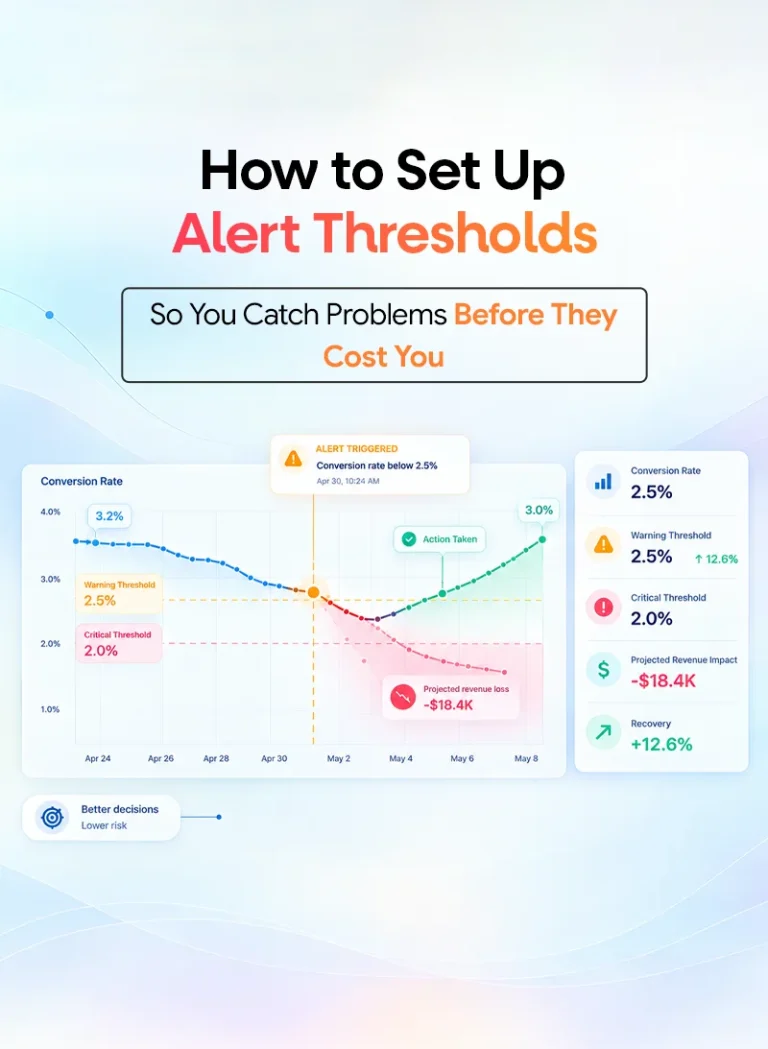
Your ecommerce store already contains the answers. Learn how AI ecommerce analytics helps founders ask business questions, understand what changed and why, and move from scattered data to clearer decisions.
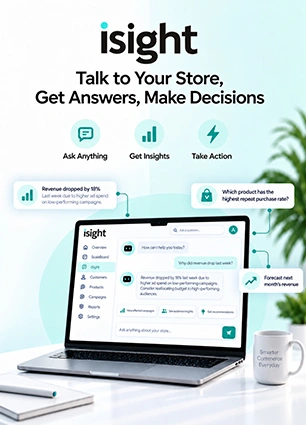
Your ecommerce store already contains the answers. Learn how AI ecommerce analytics helps founders ask business questions, understand what changed and why, and move from scattered data to clearer decisions.
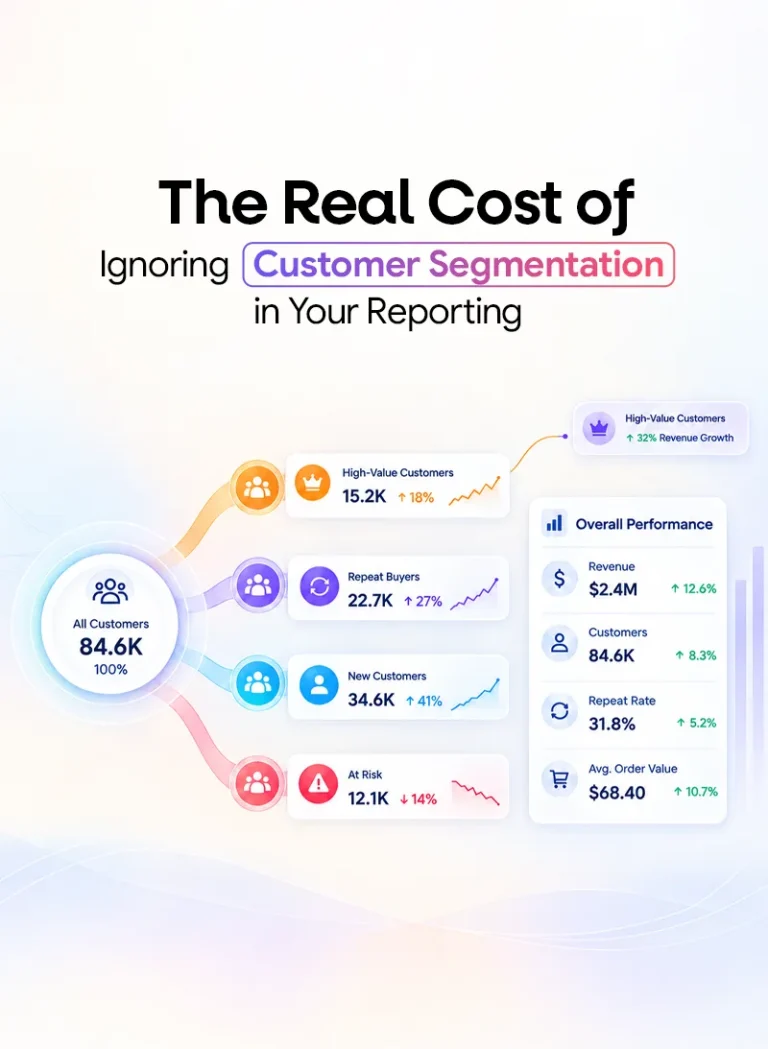
Compare Shopify conversion rate benchmarks by industry, device, traffic source, and customer type. See what a good conversion rate looks like in 2026 and learn how to benchmark your store more accurately.