
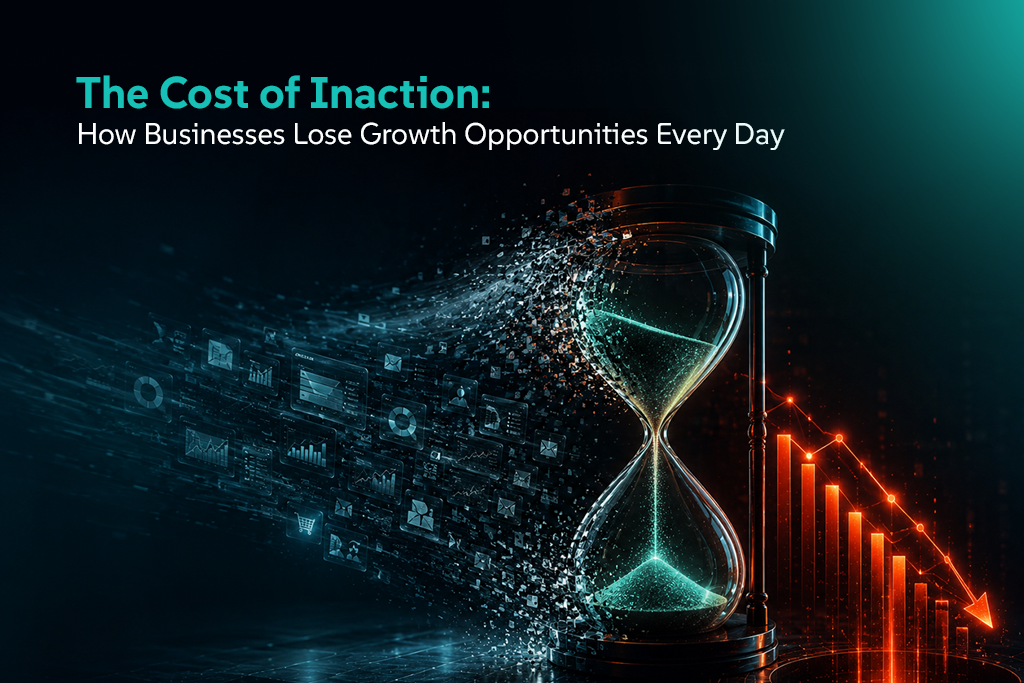
All businesses miss out on opportunities. Sometimes they are quite obvious. A marketing campaign fails to launch on time. A bestseller runs out of stock. A lucrative prospect group goes untapped. A payment glitch remains unresolved for several days.
However, sometimes the most significant mistakes are made in silence.
The founder recognizes that the company’s CAC is increasing but only acts upon seeing the weekly report. The growth team notices the ROAS is decreasing but considers it a temporary trend. The retention team identifies a growing churn rate but procrastinates on conducting a winback campaign. The operations team realizes that the bestselling SKU is running low but doesn’t associate it with current ad budget spending.
None of those things look urgent at first glance.
But soon after, the revenue starts decreasing. It becomes increasingly difficult to acquire customers. The company struggles to retain them. Margins get smaller. A perfect growth opportunity turns into an overlooked one.
That is the price of inaction.
While inaction doesn’t always involve taking no action in business, it might consist of procrastination, analysis paralysis, failing to prioritize issues and acting upon early warning signs.
For ecommerce founders, D2C brands, growth teams, and agencies, this can lead to missed growth opportunities, revenue leakage, poor customer retention, weaker profitability, and slower decision-making.
The real business opportunity cost is not only the money spent. It is the revenue not captured, the customers not retained, the campaigns not optimised, and the growth not realised because the team did not act at the right time.
This blog explains what the cost of inaction means, how delayed decision-making affects business growth, where missed opportunities appear in ecommerce, and how businesses can use decision intelligence, KPI alerts, AI-powered insights, and connected analytics to act before opportunities are lost.
The cost of inaction represents the value a company loses when it misses an important cue.
It is strongly related to opportunity costs. Opportunity cost, in layman’s terms, is the value of something you forgo when choosing between two options. The same goes for businesses where such costs are not only financial but also include such aspects as time, customers, market share, income, margins, people’s attention and growth.
Even if a company postpones its actions, it makes a decision anyway. Namely, it decides to stick to the existing reality.
In case the cost per acquisition increases but the company chooses not to investigate the reason, it will continue paying more to get customers of the same or worse quality. In case the conversion rate falls but no one analyzes the checkout process, the company is losing sales daily. And in case the churn rate grows while no one pays attention to the customer retention, it will be losing recurring revenue which could have been saved.
The cost of inaction usually is hard to estimate instantly because there is no clear line in the expenses ledger.
It may show up later as:
This is why the cost of inaction is dangerous. By the time the business clearly sees the damage, the best window to act may already be gone.
Ecommerce moves quickly.
Traffic can change within hours. Campaign performance can shift within a day. Creative fatigue can appear suddenly. Stock movement can accelerate after one successful campaign. A small checkout issue can affect hundreds or thousands of visitors before someone notices.
This makes delayed decision-making especially expensive for D2C brands.
A founder may look at revenue at the end of the week and see that sales were lower than expected. But the actual issue may have started much earlier.
Maybe the conversion rate began dropping on Tuesday. Maybe a key product page had weak engagement. Maybe Meta Ads CAC increased after creative fatigue set in. Maybe Google Ads was sending traffic, but the product was nearly out of stock. Maybe returning customer revenue was flat because no retention campaign was active.
Each signal existed. The problem was that the team did not connect them in time.
That is why the cost of inaction is not just a strategic concept. It is a daily operating risk.
For ecommerce teams, every delayed decision can affect revenue, customer acquisition, product performance, retention, and profitability.
Businesses do not usually lose growth opportunities because teams are lazy or careless.
They lose them because growth signals are scattered.
A typical ecommerce business may use Shopify or WooCommerce for store data, Meta Ads and Google Ads for paid media, GA4 and Search Console for website behaviour, Klaviyo or CRM tools for retention, WhatsApp marketing for customer communication, and finance sheets for margin and cash flow.
Each platform shows part of the story.
Shopify may show revenue. Meta Ads may show ROAS. Google Ads may show CPC. GA4 may show conversion behaviour. CRM may show repeat purchase trends. Finance may show gross margin and contribution margin.
But growth decisions require the full picture.
This is where teams get stuck.
They know performance has changed, but they do not know whether the issue is acquisition, conversion, retention, inventory, pricing, product demand, customer experience, or margin.
So they wait.
They wait for the weekly report. They wait for the agency update. They wait for more data. They wait until the issue looks “serious enough.”
That waiting period is where missed growth opportunities happen.
A campaign could have been optimised earlier. A checkout issue could have been fixed before the weekend. A retention segment could have been activated before churn increased. A low-stock SKU could have been removed from active campaigns before demand was wasted.
The business had the data. It did not have the decision speed.
Slow decisions can look harmless in the moment.
A founder may think, “Let us wait two more days before changing anything.” A marketer may think, “ROAS will recover.” A retention team may think, “We will launch the winback flow next week.” An operations team may think, “Stock is low, but it should last.”
Sometimes waiting is the right decision. Not every movement needs an immediate reaction.
But waiting without context is risky.
The business opportunity cost of slow decisions appears in different ways.
Revenue leakage happens when a business loses revenue that could have been captured with faster action. For ecommerce brands, this may come from checkout friction, stockouts, weak product pages, payment failures, delayed retargeting, or poor campaign response.
A small conversion issue over one day may not look dramatic. But if it continues for a full week, the lost revenue can become meaningful.
If CAC is rising and campaigns continue without review, the business may keep spending on inefficient acquisition. This becomes more serious when LTV and retention are weak.
The issue is not only that ads cost more. The issue is that the business may be buying customers who are unlikely to become profitable.
If churn rate increases and the retention team delays action, more customers may become inactive. This reduces customer lifetime value and puts more pressure on paid acquisition.
Revenue can increase while gross margin falls. If discounts, fulfilment costs, returns, or shipping expenses are not reviewed early, the business may grow topline revenue while weakening profitability.
When demand is high but inventory is low, the business may lose sales. When slow-moving inventory is ignored, cash may remain trapped in products that are not selling.
The cost of inaction is not always one big mistake. It is often a series of small delays that compound.
Many teams delay action because they are afraid of making the wrong decision.
That concern is valid. Reacting too quickly can create problems. Pausing campaigns too soon can reduce growth. Changing offers too often can confuse customers. Overcorrecting based on one day of data can harm performance.
But inaction also has a cost.
The right question is not, “Should we act immediately?” The better question is, “What happens if we do nothing?”
|
Business Area |
Cost of Action |
Cost of Inaction |
|
Paid Media |
Budget changes or creative tests require effort |
CAC may continue rising and ad spend may be wasted |
|
Website Conversion |
Fixing product pages or checkout may take time |
Orders may be lost every day the issue remains |
|
Retention |
Winback and CRM flows require planning |
Customers may churn before the brand responds |
|
Inventory |
Coordinating stock and campaigns takes work |
Bestsellers may go out of stock or demand may be wasted |
|
Profitability |
Reviewing margin may slow scaling decisions |
Revenue may grow while profit weakens |
|
Customer Experience |
Improving support or post-purchase journeys requires resources |
NPS, retention, and customer trust may decline |
Good decision-making is not about acting on every signal. It is about knowing when the cost of waiting is greater than the cost of acting.
Delayed decisions can quietly reduce revenue, margin, and growth.
Start your free trial with NetSights and turn scattered performance signals into faster, clearer business decisions.
Data overload is one of the biggest reasons businesses fail to act on time.
Modern ecommerce teams have access to more data than ever. But more data does not automatically create better decisions.
In fact, too much disconnected data can slow teams down.
A founder checks Shopify. The agency checks Meta Ads. The performance team checks Google Ads. The analytics team checks GA4. The retention team checks CRM. Finance checks cash flow and margin. Operations checks inventory.
Everyone is looking at something useful, but no one has one connected view of the business.
This creates analysis paralysis.
The team spends time asking:
These are good questions. But if every answer requires a manual investigation across several dashboards, the business loses speed.
This is why dashboard fatigue becomes more than a reporting problem. It becomes a growth problem.
The blog on how to stop drowning in data and start making decisions explains how businesses can reduce data overload and move toward clearer business decisions.
The cost of inaction can appear at every stage of the ecommerce funnel.
At the acquisition stage, businesses lose growth when they delay action on rising CAC, weak ROAS, poor traffic quality, campaign fatigue, or audience saturation.
For example, if CAC increases for five days and the team waits until the end of the month to review it, the brand may spend significantly more before correcting the issue.
CAC should always be reviewed with LTV, gross margin, payback period, and retention. A high CAC may be manageable if customer lifetime value is strong. It becomes dangerous when customers do not return.
The guide on CAC vs LTV for D2C brand profitability explains why acquisition cost and customer value should be read together.
At the conversion stage, inaction shows up when website friction is ignored.
A product page may have weak trust signals. A payment option may be failing. Shipping cost may appear too late in the checkout. A discount code may not work. A mobile page may load slowly. A high-intent customer may abandon the cart because the experience is not smooth.
If these issues are not identified early, traffic keeps coming in but sales leak out.
At the retention stage, businesses lose growth when they delay action on repeat purchase decline, churn rate, weak customer engagement, poor NPS, or inactive customer segments.
Retention problems are often slow-moving, which makes them easy to ignore. But over time, weak retention increases pressure on acquisition.
A business with poor retention has to keep buying new customers to replace the ones it loses.
Inventory risk is one of the most overlooked sources of missed growth opportunities.
If a bestseller is low in stock and campaigns continue scaling, the brand creates demand it cannot fulfil. If slow-moving stock is not flagged early, cash remains stuck in inventory.
A product may be popular, but if stock planning and marketing planning are not connected, growth becomes inefficient.
A brand can look successful from the outside and still lose profitability.
Revenue may grow because of higher discounts, increased ad spend, or lower-margin product mix. If gross margin, contribution margin, and cash flow are not reviewed, the business may mistake activity for healthy growth.
This is why the cost of inaction is not only about missed sales. It is also about missed profit.
Imagine a D2C fashion brand planning a weekend campaign.
On Thursday morning, the data shows:
|
Signal |
What the Team Sees |
|
ROAS |
Down 17% compared to the previous week |
|
CAC |
Up 13% |
|
Conversion Rate |
Down from 2.7% to 2.1% |
|
Cart Abandonment |
Up 10% |
|
AOV |
Slightly lower |
|
Gross Margin |
Down because of discounting |
|
Bestselling SKU |
Low stock warning |
|
Returning Customer Revenue |
Flat |
The team notices the movement but decides to wait because the weekend sale is already planned.
By Monday, revenue is below target.
At first, the team blamed bad performance. But the real issue was broader.
The brand was spending more to acquire customers. Website conversion had weakened. Cart abandonment had increased. Discounts were reducing margin. A bestseller was close to stockout. Returning customers were not contributing enough.
The cost of inaction was not just lower weekend revenue. It included wasted ad spend, missed margin, weak customer experience, lost demand, and poor team response time.
A faster decision process could have led to better actions before the sale:
This is why cost-of-inaction alerts can be valuable. They help teams understand not only what changed, but what may be lost if nothing changes.
Want to catch growth risks before they become missed opportunities?
Use NetSights to track key ecommerce signals, spot performance changes, and act before delays cost the business.
Missed growth opportunities become easier to identify when teams review connected metrics instead of isolated numbers.
|
Metric |
What It Helps Reveal |
|
Revenue |
Whether growth is slowing or leaking |
|
CAC |
Whether customer acquisition is becoming more expensive |
|
ROAS |
Whether paid media efficiency is weakening |
|
LTV |
Whether customers create enough long-term value |
|
Conversion Rate |
Whether traffic is turning into customers |
|
AOV |
Whether customers are spending enough per order |
|
Churn Rate |
Whether customers are leaving or becoming inactive |
|
Retention Rate |
Whether customers are coming back |
|
Gross Margin |
Whether revenue is profitable after product cost |
|
Contribution Margin |
Whether growth remains healthy after variable costs |
|
Cash Flow |
Whether the business can support growth plans |
|
Inventory Risk |
Whether stock problems may block revenue |
The real insight comes from connecting these metrics.
A lower ROAS is more serious when CAC is also rising. A conversion rate drop is more urgent when traffic is increasing. Revenue growth is weaker when gross margin is falling. Strong demand is risky when inventory is low. High CAC becomes more dangerous when retention is poor.
The blog on 5 weekly ecommerce metrics for founders explains how founders can use a weekly review to identify these signals before they become larger business problems.
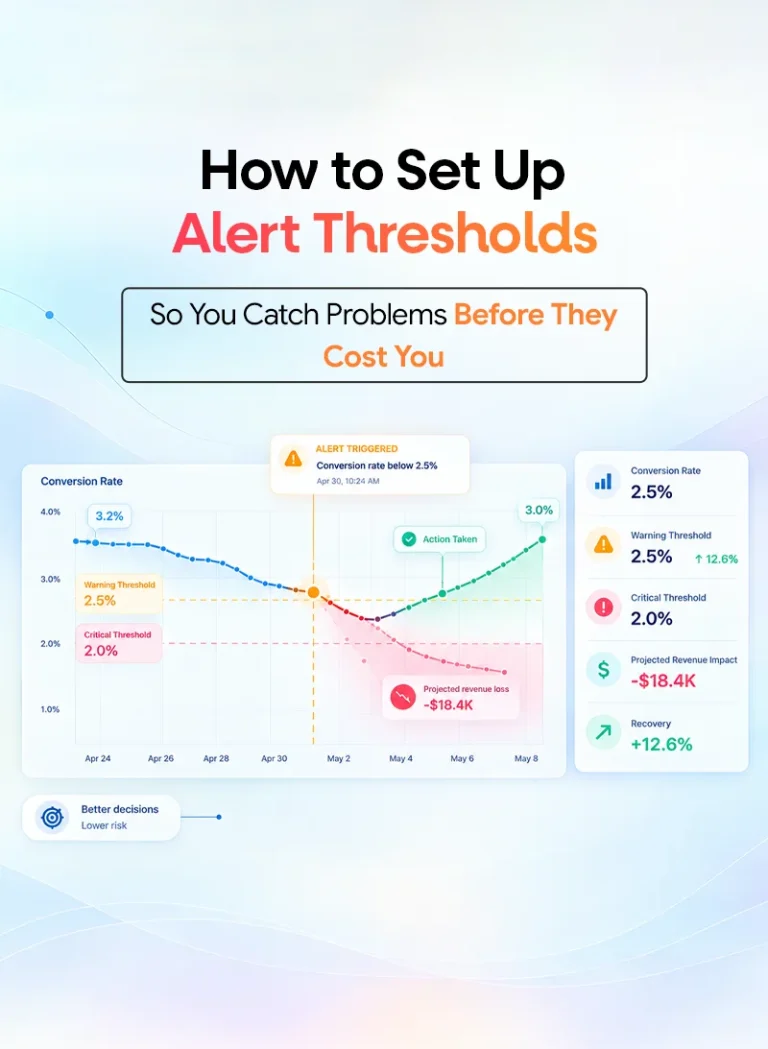
Traditional KPI alerts usually tell teams when a number crosses a threshold.
For example:
These alerts are useful, but they do not always explain business impact.
Cost-of-inaction alerts go a step further. They help teams understand why a signal matters and what may happen if the business does not respond.
For example, instead of only saying, “Conversion rate dropped,” a stronger alert may indicate that the drop is affecting paid media efficiency, increasing acquisition cost, and creating revenue leakage during a high-traffic period.
Instead of only saying, “Inventory is low,” it may show that an active campaign is still driving traffic to the low-stock product.
This turns an alert into a decision trigger.
The point is not to create panic. The point is to help teams prioritise action based on business impact.
Revenue leakage can be reduced when businesses create a stronger connection between data, ownership, and action.
The first step is to identify the signal. This may be a revenue drop, rising CAC, falling ROAS, lower conversion rate, increasing churn, weak retention, or inventory risk.
The second step is to connect the signal with related metrics. If CAC rises, check LTV, conversion rate, ROAS, blended CAC, gross margin, and payback period. If conversion rate drops, check traffic quality, cart abandonment, checkout behaviour, product availability, and page performance.
The third step is to understand impact. A small metric change can create a large business effect if it affects high-traffic pages, high-spend campaigns, or bestselling products.
The fourth step is to assign ownership. Growth, retention, operations, product, finance, or leadership should know who is responsible for responding.
The fifth step is to review the result. Acting quickly is useful, but teams also need to understand whether the action solved the problem.
This gives businesses a repeatable way to reduce the cost of inaction.
It also shifts the team from passive reporting to active decision-making.
Decision intelligence enables companies to bridge from disparate data to actionable decisions.
Decision intelligence utilizes data, analytics, business rules, context and AI-driven insight in order to make better decisions. In the case of an ecommerce company, this means connecting signals generated by sales, marketing, customer behavior, products, operations and financial departments.
Decision intelligence doesn’t substitute human judgment, it enhances the quality and speed of the decision process.
The founder makes the decisions. The growth team assesses campaigns. The retention team creates customer journeys. Operations handles the stock. Finance assesses profitability.
But decision-ready insights help all teams make decisions in a more informed way.
When ROAS declines, decision intelligence will determine if the reason is inefficiency of the campaign, low conversion, low AOV, lack of stock or quality of customers.
When churn rates increase, decision intelligence will help connect the dots and link the reasons to repeat purchase behavior, product category, customer segments and post-purchase journey.
When the revenues decline, decision intelligence will help to determine if it is due to traffic, conversion, retention, product mix, stock or margins.
That’s why decision intelligence is important for businesses that want to decrease growth leakage opportunities.
For a deeper explanation, the guide on ecommerce decision intelligence explains how decision-ready insights help ecommerce teams move beyond reporting.
For ecommerce founders, the hardest part is rarely collecting data. The harder part is knowing what to act on.
NetSights AI Scaleboard helps ecommerce teams connect data from platforms such as Shopify, WooCommerce, Meta Ads, Google Ads, GA4, Search Console, CRM, WhatsApp marketing, customer data, sales data, marketing data, and product performance.
Instead of giving teams another static dashboard, NetSights helps surface decision-ready insights, intelligence cards, KPI alerts, performance signals, and cost-of-inaction alerts.
This helps teams answer questions such as:
For businesses struggling with dashboard fatigue, the difference between dashboards and a Scaleboard is important. The guide on NetSights vs ecommerce dashboards and Scaleboard difference explains why ecommerce teams need more than passive reporting.
iSight AI revenue intelligence helps teams understand revenue movement, performance risks, and growth opportunities. It is useful when founders need to know whether missed growth is connected to acquisition, conversion, retention, inventory, or profitability.
Netification KPI alerts help teams respond when important business metrics move unexpectedly.
If CAC rises, ROAS drops, conversion rate weakens, revenue slows, or inventory risk increases, alerts can help teams act before the impact grows.
This is where cost-of-inaction thinking becomes practical. The goal is not just to know that a metric moved. The goal is to understand what delay may cost the business.
Netty WhatsApp AI Copilot helps founders and teams access ecommerce insights through WhatsApp. Instead of switching between dashboards, they can ask business questions and get clearer context from their data.
This matters because speed is part of decision quality. A business that understands the issue faster has a better chance of acting before the opportunity is lost.
Ready to reduce the cost of delayed decisions? Start your free trial with NetSights and turn scattered ecommerce data into decision-ready insights.
The growth team spots an increase in CAC but fails to address it till the end of the month. In doing so, the brand has incurred additional expense in customer acquisition beyond the budgeted amount.
When LTV and repeat purchase rate is poor, the cost of this inaction is not just the additional ad spend. It’s also about customer acquisition whose lifetime value isn’t enough.
Revenue is looking good but gross margin and contribution margin have dropped because of discounts, returns, shipping, and fulfillment costs.
The founder chooses to ignore margin analysis since there is positive revenue growth. In this case, the cost of inaction is growth that generates low margins.
Here, the cost of inaction is margin leakage.
Churn rate goes up and repeat purchase rate declines. The retention team wants to run a winback campaign but pushes back on the launch date.
As a result, some customers go inactive by the time the brand reaches out to them. Cost of inaction in this case is reduced LTV and retention.
A product is selling well, but inventory is low. Marketing continues scaling ads without knowing the stock risk.
The business creates demand it cannot fully fulfil. The cost of inaction is wasted traffic, disappointed customers, and missed revenue.
An ecommerce agency sees weak ROAS and declining conversion rate but waits to include the insight in the next weekly report.
The client loses another few days of performance before action begins. The cost of inaction is not only delayed reporting. It has a delayed impact.
A cost-of-inaction mindset helps teams ask better questions.
Instead of only asking, “What happened?” teams should also ask, “What happens if we do nothing?”
If CAC rises, ask what this will cost if it continues for another week.
If conversion rate drops, ask how much revenue could leak before the issue is fixed.
If churn rate increases, ask how many customers may become inactive before a retention campaign goes live.
If inventory risk appears, ask how much demand may be wasted if campaigns keep scaling.
If gross margin declines, ask whether the business is trading profitability for short-term revenue.
This mindset helps teams prioritise action based on business impact.
Not every issue needs an immediate fix. But every important issue needs an owner, a timeline, and a decision.
That is how businesses reduce missed growth opportunities.
The cost of inaction does not need to be complicated.
Businesses can start with a practical framework:
|
Step |
Question to Ask |
Example |
|
Identify the signal |
What changed? |
Conversion rate dropped |
|
Find the related metrics |
What else moved? |
CAC rose and cart abandonment increased |
|
Estimate impact |
What could this cost if ignored? |
Lower sales and wasted ad spend |
|
Assign ownership |
Who should respond? |
Growth and website team |
|
Review outcome |
Did the action reduce the problem? |
Conversion recovered after checkout fix |
For a more financial view, teams can also compare the estimated value of lost revenue with the cost of fixing the issue.
For example, if a checkout issue is causing missed orders, the business can estimate lost revenue per day and compare it with the cost of resolving the issue quickly.
This does not need to be perfect. Even a directional estimate can help teams decide whether action is urgent.
The goal is not to turn every decision into a spreadsheet. The goal is to make the cost of waiting visible.
The cost of inaction is not always visible at first. That is why it is easy to ignore.
A delayed campaign decision, missed retention signal, rising CAC, falling conversion rate, inventory risk, checkout issue, or margin problem may seem small at the moment. But over time, these delays create missed growth opportunities, revenue leakage, weaker customer value, and slower business performance.
For ecommerce founders, D2C brands, growth teams, and agencies, faster decisions do not come from checking more dashboards. They come from connected analytics, decision intelligence, real-time alerts, KPI alerts, AI-powered insights, and a clearer understanding of business opportunity cost.
NetSights helps ecommerce teams reduce the gap between data and action. With its AI Scaleboard, iSight, Netification, Netty, intelligence cards, WhatsApp insights, performance intelligence, and cost-of-inaction alerts, teams can identify risks earlier and act before opportunities are lost.
If your business is ready to stop losing growth to delayed decisions, start your free trial with NetSights and turn performance signals into smarter business decisions.
Ready to reduce the cost of delayed decisions?
Start your free trial with NetSights and turn performance signals into smarter business decisions.
A: The cost of inaction in business is the value lost when a company delays or avoids taking action. It can appear as missed revenue, wasted ad spend, higher CAC, lower retention, poor margins, stock issues, or missed growth opportunities.
A: Businesses lose growth opportunities when they fail to act on important signals such as falling conversion rate, rising CAC, weak ROAS, churn, inventory risk, or revenue leakage. The data may exist, but delayed decisions reduce the chance to act in time.
A: Delayed decision-making hurts growth because small performance issues can compound. A few days of ignored CAC increases, checkout problems, stock risk, or retention decline can affect revenue, profitability, and customer value.
A: Business opportunity cost is the value a business gives up when it chooses one option, delays action, or fails to act. In growth teams, it can include missed sales, lost customers, wasted spend, delayed campaigns, or lost market opportunities.
A: Businesses can reduce revenue leakage by monitoring key metrics, connecting related signals, setting KPI alerts, acting on decision-ready insights, and assigning clear ownership for performance issues.
A: Decision intelligence reduces the cost of inaction by helping teams connect data, detect performance changes, identify business impact, and act faster. It turns scattered analytics into clearer decisions.
A: Cost-of-inaction alerts are alerts that help teams understand what could happen if an important performance issue is ignored. They go beyond basic KPI movement by adding business impact and urgency.
A: Businesses often fail to act because their data is scattered across multiple tools, dashboards, and teams. Even when the right signals exist, unclear ownership, delayed reporting, and dashboard fatigue can slow decision-making.
A: Common missed growth opportunities include ignoring rising CAC, delaying retargeting campaigns, not fixing checkout issues, missing low-stock warnings, launching retention campaigns too late, or failing to act when conversion rate starts dropping.
A: Real-time alerts help teams notice important metric changes earlier. When CAC rises, ROAS drops, revenue slows, or inventory risk increases, alerts can help businesses respond before the issue causes larger revenue leakage or missed growth.
We write about growth, retention, and the numbers that actually predict what happens next for D2C brands. Have a topic you'd like us to cover? Get in touch .
Your ecommerce store already contains the answers. Learn how AI ecommerce analytics helps founders ask business questions, understand what changed and why, and move from scattered data to clearer decisions.
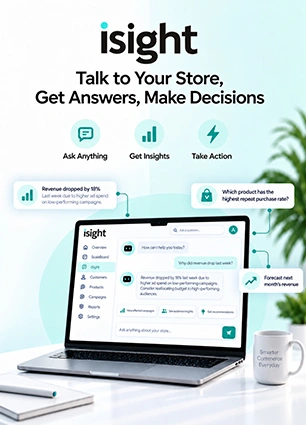
Your ecommerce store already contains the answers. Learn how AI ecommerce analytics helps founders ask business questions, understand what changed and why, and move from scattered data to clearer decisions.
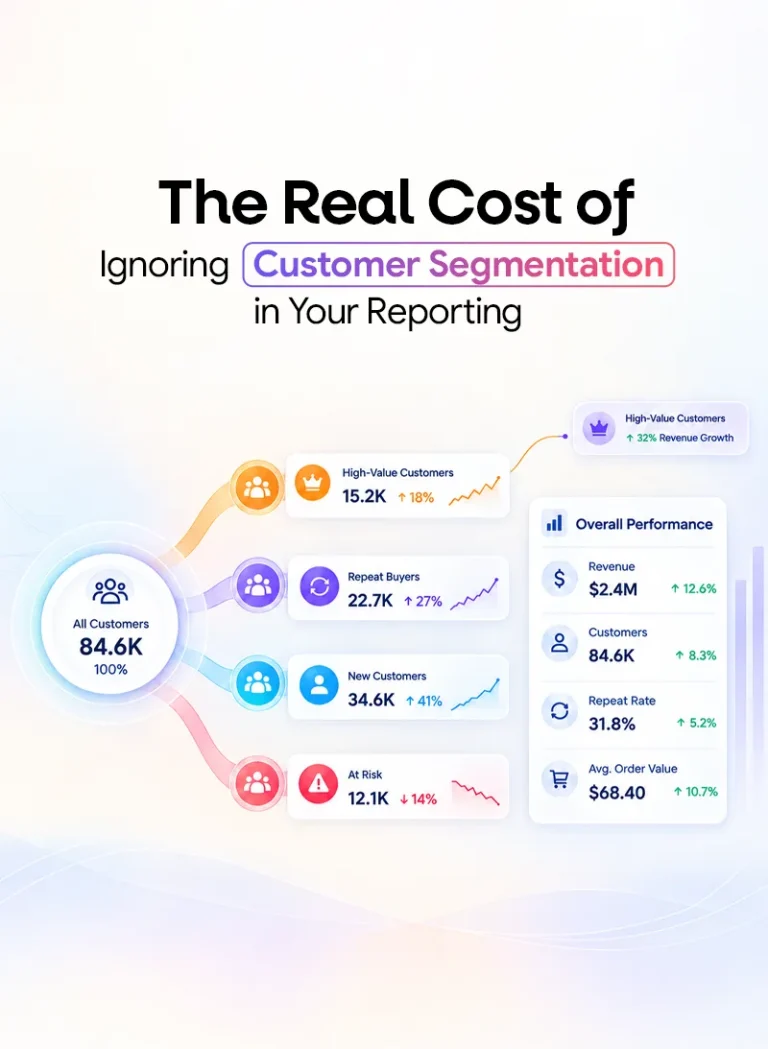
Compare Shopify conversion rate benchmarks by industry, device, traffic source, and customer type. See what a good conversion rate looks like in 2026 and learn how to benchmark your store more accurately.